
For bulk buyers, choosing a Long Grip Socks supplier involves more than comparing unit prices. Buyers need to check grip consistency, sizing, fabric feel, stitching, and repeat-order reliability. A silicone pattern may look strong in a sample, yet perform differently after washing. Small details matter: heel alignment, cuff pressure, and whether grip dots cover the areas that contact the floor.
The market context is growing, but broad industry figures should not be mistaken for Long Grip Socks sales data. Grand View Research estimated the global sports apparel market at about US$203.8 billion in 2023, with projected growth through 2030. The Sports & Fitness Industry Association reported that 242.6 million Americans took part in at least one sport or fitness activity in 2023. These reports indicate wider demand for activewear, not a measured forecast for this specific product category. Buyers should request current factory specifications, material details, sample-testing results, and clear production timelines before placing a large order.
There is an important sourcing limitation: I cannot verify a named expert’s quotation specifically about Long Grip Socks, so I will not invent one. That gap is worth noting. A reliable supplier should welcome practical questions and provide evidence that buyers can check, rather than relying on polished product photos or unsupported claims.
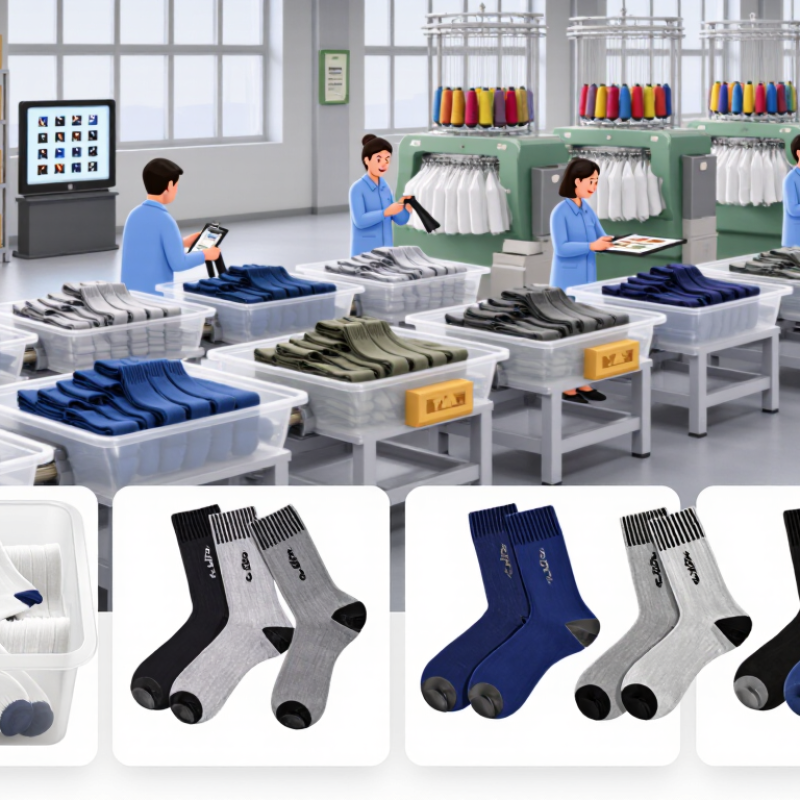
Long grip socks extend toward the calf or knee, while standard grip socks usually stop below the ankle. Both use textured pads under the foot to add traction on smooth indoor surfaces. The longer shaft can help keep the sock in place and cover more of the lower leg. It does not automatically provide compression or improve balance. Fit still matters.
For bulk buyers, the useful differences are practical: shaft height, cuff pressure, grip coverage, and yarn blend. A dense silicone pattern may feel secure on a studio floor, but too much grip can feel uncomfortable during movement. Grand View Research’s 2023 global socks market report estimated the market at USD 42.08 billion and projected a 6.3% compound annual growth rate from 2024 to 2030. This figure covers socks broadly, not long grip socks specifically. Buyers should treat it as market context, not proof of demand for one style. Ask suppliers for sample pairs, then check whether the heel stays aligned and the cuff rolls down after repeated wear. A useful test is simple: walk, stretch, and wash them. One limitation remains: reported material specifications do not always predict how a sock feels after a full session.
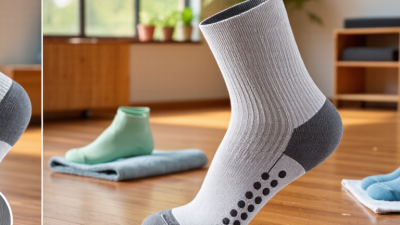
For bulk buyers, long grip socks should balance secure traction with comfortable wear. Cotton-rich yarns can feel soft against the skin, while polyester or nylon blends often help manage moisture and repeated use. Elastane supports a close fit around the arch and ankle. Check the fiber composition and sizing range against your intended users; a sock that slips inside a shoe can undermine even a strong grip pattern.
Tips: Request samples in more than one size. Compare grip coverage under the heel and forefoot, then wash-test the socks using your expected care routine. Ask for consistent measurements across production batches.
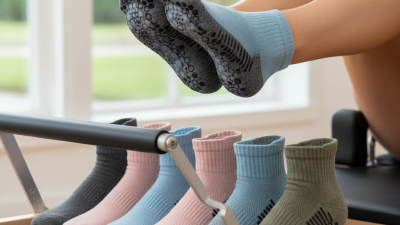
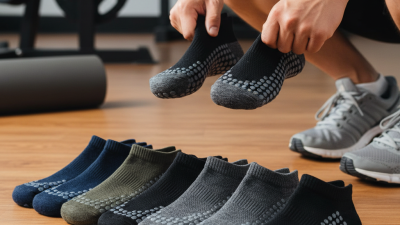
Grip dots, lines, and larger silicone zones each create a different feel. Dots may allow more flexibility, while broader zones can provide firmer contact on smooth indoor floors. Too much grip can feel stiff, though, and the best layout depends on the activity and surface. Check that the print stays attached after repeated washing and that it does not press uncomfortably against the foot. One detail is easy to miss: attractive patterns do not guarantee reliable traction. Test socks during movement, not only while standing still.
Typical moisture-regain values help compare common sock fibers: cotton absorbs more moisture, while polyester absorbs less. Actual long-grip sock performance depends on the fiber blend, knit construction, fit, and grip pattern; these figures describe fibers, not finished products.
When evaluating a Chinese long grip socks supplier, start with the product, not the catalog. Request samples in your intended sizes and compare the sock length, cuff tension, toe seams, and grip pattern. Small details matter. Silicone dots should feel secure and sit evenly across the sole, especially around the heel and forefoot. Ask for material composition and written specifications before discussing a large order.
Test samples after repeated washing, following the care instructions. Check whether the grips peel, the fabric pills, or the cuff loses its shape. One sample cannot prove that every bulk pair will match. Ask how the supplier controls production batches and handles defects. Request photos or inspection records from a recent run, but treat documents as supporting evidence, not a substitute for clear answers. Ask for proof.
A reliable supplier should explain minimum order quantities, sample costs, production timelines, and packaging options without vague promises. Confirm which details appear on the purchase specification, including size ratios, colors, and grip placement. Communication matters. If answers change between messages, clarify them before paying a deposit. I would not judge a supplier by price alone; a cheaper pair may need more inspection, and that effort has a cost. Even a careful evaluation can miss something, so keep the first order manageable.
Bulk buyers sourcing long grip socks should compare more than unit price. Grand View Research valued the global socks market at USD 42.2 billion in 2022 and projected 6.4% annual growth from 2023 to 2030. This broader category is not a grip-sock forecast, but it shows the scale of the market. Ask suppliers to quote several quantity tiers, such as 500, 1,000, and 3,000 pairs. Confirm whether pricing includes grip printing, packaging, and pre-production samples. A low quote can hide setup fees.
Customization may cover sock length, yarn blend, cushioning, silicone grip layout, colors, and packaging. Request a size chart and a physical sample before approving bulk production. Grip placement matters: small dots under the heel and forefoot may suit studio use, while denser coverage can change feel and flexibility. Minimum order quantities vary with color count, yarn availability, and custom artwork. Ask for separate MOQs for stock designs and fully customized runs. Sizing is rarely perfect on the first run; check it twice.
Tips: Send a clear tech pack with measurements, artwork, target quantity, and delivery window. Ask how defects are handled and whether repeat orders use the same specifications. Leave time for sample revisions. A rushed approval can become an expensive lesson.
| Order Dimension | Standard Bulk Option | Customized Option | Planning Notes |
|---|---|---|---|
| Minimum order quantity | Often around 300–500 pairs per style for basic stock colors | Often around 500–1,000 pairs per style or color | Actual MOQ depends on yarn, color, construction, and factory setup. |
| Grip pattern | Common silicone grip patterns, such as dots or short bars | Custom grip layout, coverage, or shape, subject to tooling and print limits | Request a grip sample to check traction, flexibility, and wash performance. |
| Sock length and sizing | Crew or knee-high styles in standard size ranges | Custom cuff height, size range, or size labeling | Confirm measurements on a size chart; sizing conventions vary by market. |
| Materials | Common blends include cotton or polyester with nylon and elastane | Fiber blend, yarn feel, and cushioning can be specified | Ask for the fiber composition and care instructions for the selected style. |
| Color and branding | Available stock colors; standard packaging | Custom yarn colors, knitted details, labels, or packaging | Custom colors and packaging may increase MOQ and approval time. |
| Samples | Existing-style samples may be available before a bulk order | A custom sample may be required for approval | Confirm sample charges, shipping costs, and whether charges are credited to the order. |
| Production lead time | Approximately 15–30 days after order details are confirmed | Approximately 25–45 days, depending on development and materials | These are indicative planning ranges, not guaranteed delivery dates. |
| Bulk order checks | Confirm pair count, size breakdown, colors, and packing method | Approve specifications, samples, artwork, and packaging before production | Request a written quotation covering MOQ, payment terms, inspection, and shipping. |
| Indicative sourcing benchmarks only. Minimum quantities, customization availability, and lead times vary by supplier, product specification, and order season; confirm all terms in a written quotation. | |||
For bulk buyers, sock quality control should be visible, not just promised. Request a pre-production sample, then compare finished pairs against agreed measurements, including cuff length, sole thickness, and grip-dot spacing. Ask how the supplier checks elastic recovery and grip adhesion after washing. Inspect cartons for mixed sizes, loose threads, and dampness before dispatch. Small defects matter. Keep dated inspection photos and a signed packing list; they make disputes easier to assess. The World Bank’s 2023 Logistics Performance Index evaluated 139 countries across customs, infrastructure, tracking, and other logistics measures. That variation is a reminder to check the export route, not only the factory.
Shipping plans affect landed cost and delivery reliability. UNCTAD’s Review of Maritime Transport 2024 reports that over 80% of world merchandise trade by volume moves by sea. For long grip socks, confirm carton dimensions, gross weight, shipping marks, and moisture protection before booking space. Compare quoted Incoterms carefully, and clarify who arranges freight, insurance, and export documents. Ask a customs broker or freight forwarder to verify the product description, tariff classification, and destination requirements before shipment. A supplier’s estimate is useful, but it is not a customs ruling. One practical weakness: even careful sampling cannot catch every defect in a large run, so buyers may need a final random inspection.