Choosing Tavi Pilates Socks for global buyers requires more than matching colors with studio uniforms. The right pair must support controlled movement, secure footing, and comfortable repetition. Joseph Pilates, the founder of Contrology, wrote, “The Pilates Method teaches you to be in control of your body and not at its mercy.” That principle remains useful when evaluating grip socks today. A reliable pair should help the foot feel connected to the mat, without creating distracting pressure.
Look closely at the silicone grip pattern. Small, evenly spaced grips can support transitions and reformer work. Check the heel construction, toe coverage, and arch fit. A sock that twists during footwork can quickly become irritating. Breathable cotton blends may suit warm studios, while moisture-managing fibers can support longer sessions. However, fabric percentages alone do not guarantee comfort. Real testing matters. Walk, point, flex, and perform controlled footwork before making a large purchase.
Global buyers should also examine Tavi Pilates Socks sizing charts, regional conversions, washing instructions, packaging details, and return policies. Retailers need consistent labeling across different markets. Studios may prefer neutral colors, while individual customers often want expressive patterns. Product photography should show the sole clearly, not only the upper design. This detail is easy to miss. A tidy specification sheet still cannot predict every foot, every floor, or every climate. Buyers should compare samples, collect user feedback, and revise orders carefully. Comfort, grip, durability, and trustworthy information should guide the final decision.
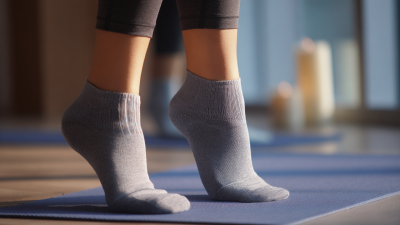
Pilates grip socks are specialized socks for Pilates, barre, yoga, and studio training. They usually combine a close-fitting knit, elastic support, and rubberized dots beneath the foot. The grip helps reduce sliding during movements such as roll-downs, lunges, and reformer footwork. Open-toe and full-toe designs offer different sensations and hygiene preferences. Most pairs are lightweight, washable, and shaped to remain secure during repeated ankle flexion. A good pair should feel like a second skin. Not armor. In practice, fabric quality matters as much as the grip pattern. If the cuff cuts into the ankle, concentration suffers, even when traction is excellent. This detail is easy to overlook.
These socks suit beginners who feel unstable on smooth studio floors. They also help experienced users maintain contact during controlled transitions. Older adults may appreciate extra traction, but fit must not restrict circulation. Instructors, physiotherapists, and studio owners can assess needs by observing movement, rather than trusting packaging alone. Global buyers should check size charts, fiber content, care instructions, and local labeling requirements. Cotton-rich blends may feel soft, while synthetic fibers often dry faster after class. Neither option guarantees comfort for every foot shape. I have found that a secure heel can matter more than extra grip. That observation is not universal. Some users prefer less coverage and stronger barefoot feedback. A small trial can reveal sizing problems before a larger order.
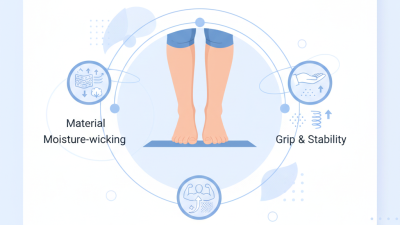
Material affects comfort, durability, moisture control, and fit during repeated Pilates sessions. Cotton feels soft and breathable, but it may hold sweat and dry slowly. Bamboo blends feel smooth and absorbent, although their long-term recovery can vary. Polyester and nylon dry faster and resist frequent washing. A small amount of elastane helps the sock follow the foot without squeezing the toes.
I have compared socks after studio use, not only from product samples. The difference becomes clear after several washes. Check fabric weight, stretch recovery, seam softness, and shrinkage.
Grip design deserves equal attention. Silicone or rubber dots can support controlled movements on reformers and mats. Full-sole coverage may improve stability, while separated toe grips can support balance and foot awareness.
More grip is not always better. Dense patterns may feel stiff during toe flexion. I once preferred a heavily coated sole, but it reduced comfort during longer sessions. That judgment needed revision.
Ask suppliers for abrasion tests, wash-cycle results, material composition, and production consistency. Grip should remain attached after repeated washing. It should also avoid sharp edges or strong chemical odors.
Buyers should compare sizing across regions, since “medium” is not globally consistent. Test samples with different foot shapes and movement styles. A reliable evaluation includes standing, lunging, rolling, and sweating. Real use exposes weaknesses.
Global buyers should treat Pilates sock sizing as a measurement task, not a label choice. A size chart is not truth. Measure foot length and width, then compare both with the supplier’s data. Check whether sizing follows US, UK, EU, or centimetre standards. The ISO 9407 Mondopoint system supports millimetre-based foot sizing, which reduces conversion errors. Leave limited extra space, but avoid loose heels. During Pilates, excess fabric can fold beneath the arch and affect balance.
Comfort depends on pressure, moisture control, and seam placement. Test the toe seam with two fingers before approving samples. The fabric should stretch across the forefoot without compressing the toes. A 2024 Textile Exchange report recorded global fibre production at about 124 million tonnes in 2023, with polyester representing roughly 57%. This explains its common use in quick-drying blends, but fibre content alone cannot prove comfort. Ask for fabric weight, stretch recovery, breathability tests, and washing results. Some suppliers provide impressive percentages. The testing method may remain unclear.
Durability needs practical evidence. Request abrasion results using ASTM D3884 or a comparable method, plus pilling and repeated-wash data. Inspect the grip dots after ten to twenty wash cycles. They should remain flexible, not become brittle or peel. Seam strength matters around the toes and heel. ASTM D4966 is also useful for abrasion comparison, although laboratory wear differs from studio use. My own checklist would include an actual class trial, because a perfect report can miss slipping on smooth floors. Fit changes after washing, too. That detail is often overlooked.
How to Choose Tavi Pilates Socks for Global Buyers?
For global buyers, certification and safety records should guide every Pilates sock purchase. I check the fiber content, dye safety, grip material, and stitching quality before discussing price. A reliable supplier should provide recent laboratory reports, production-batch details, and clear test methods. Reports should cover harmful substances, including formaldehyde, azo dyes, heavy metals, and restricted plasticizers. Paperwork alone is not enough. The sock must also survive washing without loose grips or damaged seams.
Market requirements can differ considerably. European buyers may request REACH-related chemical compliance and documented textile testing. U.S. buyers should review applicable consumer-product rules, especially for children’s sizes. UK shipments may need separate conformity documentation after the relevant market checks. Buyers should also confirm fiber-labeling rules, packaging information, and importer responsibilities. ISO-based quality systems can show process control, but they do not replace product-specific safety testing. I would not treat one test report as universal proof.
Tips: Ask for reports issued by an independent, competent laboratory. Match the report’s product name, material, and production date. Request a sample from the same batch. Stretch it across a studio floor, inspect the grip pattern, and wash it repeatedly. Check for odor, color bleeding, latex content, and skin irritation. If the supplier avoids simple questions, pause the order. Some details are easily missed, even by experienced buyers.
Regulatory framework categories that should be reviewed before selling ordinary consumer Pilates socks in selected markets.
The chart shows compliance areas requiring review, not a certification score. Ordinary consumer socks generally do not need universal third-party certification. However, buyers should verify consumer-product safety rules, textile composition and labeling requirements, and restricted-substance controls. If socks are marketed as protective equipment, additional PPE conformity requirements may apply.
Global buyers should assess Pilates grip sock suppliers beyond attractive photos. Grand View Research valued the global sports apparel market at approximately USD 248.6 billion in 2023. That scale creates many suppliers, but quality can vary sharply. Request factory profiles, production photos, audit records, and recent test reports. Check cotton composition, silicone grip durability, heel stitching, size grading, and packaging accuracy. Ask for a sample wash test. One sample is not enough.
Pricing needs a complete landed-cost view. Compare fabric weight, grip coverage, labeling, carton size, payment fees, freight, duties, and inspection costs. McKinsey’s 2024 State of Fashion report emphasizes stronger consumer value expectations. Cheap socks may fail after several washes. I would not trust the lowest quotation without a defect allowance and replacement policy. The World Bank’s 2023 Logistics Performance Index can help compare supplier-country customs, infrastructure, and delivery reliability. Still, a strong country score cannot guarantee one factory’s performance.
Tips: Ask for three quotations with identical specifications. Confirm MOQ, sample fees, production days, shipping terms, and payment milestones in writing. Use clear Incoterms and define who handles import documents. Request a pre-shipment inspection before final payment. Keep a small pilot order first. Mistakes happen. A supplier may promise “fast delivery” but omit holiday closures or material delays, so add a realistic buffer. Review every carton before resale.
Practical sourcing benchmarks for non-slip Pilates socks. Prices and lead times are indicative ranges and should be confirmed by quotation, sample approval, destination, and Incoterms.
| Assessment Area | Buyer Checkpoint | Indicative Benchmark | Documents or Tests to Request | Buyer Decision Guidance |
|---|---|---|---|---|
| Product Construction | Fiber composition | Common commercial compositions include cotton or bamboo-based yarn blended with polyester, nylon, and elastane. Elastane is typically used to improve stretch and recovery. | Fiber-content declaration, material specification, and a physical sample checked against the quotation. | Recommended Choose a composition that balances softness, moisture management, durability, and fit retention. |
| Product Construction | Non-slip grip coverage | Grip should cover the main pressure zones of the sole, including the forefoot and heel, without creating uncomfortable hard edges. | Close-up sole photographs, grip-material description, wash-cycle sample, and an on-floor movement test. | Review Insufficient grip can reduce safety; excessive or rigid grip can affect natural foot movement. |
| Product Construction | Seam and toe comfort | A flat or low-profile toe seam is generally more suitable for repeated studio use than a bulky internal seam. | Inside-out sample inspection, seam-strength information, and wearer feedback after a full training session. | Recommended Reject samples that cause rubbing, pressure points, or visible seam failure. |
| Sizing | Size range and grading | Offer size groups that match the target market's foot-length system. A clear size chart in centimeters reduces international conversion errors. | Foot-length size chart, tolerance range, grading rules, and sample sizes across the proposed range. | Review Do not rely only on S/M/L labels; confirm actual foot-length measurements. |
| Supplier Capability | Production capacity | For a recurring program, request normal monthly capacity, peak-season capacity, and the number of production lines allocated to the order. | Capacity statement, production schedule, machinery list, and evidence of comparable private-label production. | Recommended Capacity should be assessed against the buyer's forecast, not only the supplier's maximum claim. |
| Supplier Capability | Quality-control process | A documented process should include incoming-material checks, in-line inspection, final inspection, carton verification, and defect records. | Quality manual, inspection checklist, AQL plan if used, corrective-action procedure, and sample inspection report. | High Risk Be cautious when quality control is described only verbally or occurs after packing. |
| Compliance | Chemical and product safety | Requirements depend on the destination market. Buyers should identify applicable textile, chemical, labeling, and packaging rules before production. | Recent third-party laboratory reports, restricted-substance test results, fiber labeling information, and destination-market compliance declaration. | High Risk Reports should identify the tested material, test date, laboratory, and applicable standard. |
| Sampling | Sample development | A normal sample process may include one basic sample, one revised sample, and a pre-production approval sample, depending on customization. | Sample timeline, sample fee, revision policy, approved specification sheet, and signed or digitally confirmed artwork. | Recommended Approve the final sample before bulk production and define which attributes are critical. |
| Pricing | Indicative unit-price structure | For standard private-label ankle or crew Pilates socks, a broad factory quotation range may be about USD 0.80–2.50 per pair before freight, duties, taxes, testing, and special packaging. | Itemized quotation showing yarn, grip, logo, packaging, testing, tooling, and shipping separately. | Review Compare like-for-like specifications; a lower price may exclude packaging, testing, or custom development. |
| Pricing | Quantity effect on price | Unit prices commonly decrease at higher quantities because setup, knitting, printing, and packaging costs are spread across more pairs. | Tiered pricing at several quantities, including sample quantity, trial order, and projected annual volume. | Review Confirm whether the minimum quantity applies per color, size, logo, or total order. |
| Order Terms | Minimum order quantity | A practical starting point for customized production may range from approximately 500–3,000 pairs, but custom colors, grips, labels, and packaging can raise the minimum. | Written MOQ by style, color, size, logo method, and packaging type. | High Risk Ask whether mixed sizes and colors can be combined to reach the MOQ. |
| Order Terms | Production lead time | After sample approval and deposit, standard production commonly takes about 25–45 days; complex customization or peak periods may require longer. | Production calendar, raw-material availability, approval deadlines, and written late-delivery procedure. | Review Separate sample-development time, production time, inspection time, and transit time. |
| Order Terms | Payment terms | A common first-order structure is a deposit before production with the balance due after completion and before shipment. The exact split is negotiable. | Pro forma invoice, beneficiary verification, payment milestones, inspection rights, and refund or cancellation terms. | High Risk Use payment controls appropriate to the order value and verify bank-account changes independently. |
| Logistics | Incoterms and landed cost | EXW, FOB, CIF, and DDP place different responsibilities on the buyer and seller. Freight, insurance, duties, taxes, and customs clearance must be allocated explicitly. | Quotation with named place, Incoterms version, carton dimensions, gross weight, HS-code proposal, and shipping estimate. | Recommended Compare total landed cost rather than unit price alone. |
| Packaging | Retail and export packaging | Packaging should protect the grip surface, maintain pair matching, and meet destination labeling and carton-marking requirements. | Packaging mock-up, barcode requirements, materials specification, carton test details, and packing ratio. | Review Confirm whether packaging costs include inserts, hangtags, polybags, barcodes, and master cartons. |
| After-Sales | Defect allowance and claims | The purchase agreement should define acceptable quality limits, inspection timing, evidence requirements, claim deadlines, and remedies such as replacement or credit. | Quality agreement, defect classification, inspection procedure, replacement policy, and claim-resolution timeline. | Recommended Agree on remedies before payment rather than negotiating after a shipment problem occurs. |
| Commercial Fit | Supplier scorecard | A balanced evaluation can weight quality and compliance at 35%, price at 20%, delivery reliability at 20%, customization at 15%, and communication at 10%. | Completed supplier questionnaire, sample scorecard, quotation comparison, reference checks, and trial-order results. | Recommended Use the same scoring method for every supplier and retain the evaluation record. |