7 Tips for Buying Pilates Crew Socks in Bulk
Buying Pilates Crew Socks in bulk is not just a price decision. It is a practical choice about grip, comfort, sizing, and how well each pair holds up after repeated classes and washes. A low unit cost can look appealing beside a carton of neatly packed socks. But thin fabric, slippery soles, or inconsistent sizing may leave customers disappointed.
Joseph Pilates, the creator of the Pilates method, is often quoted as saying, “Physical fitness is the first requisite of happiness.” That principle does not prescribe a sock design. Still, it points to a useful standard: small equipment choices should support a comfortable, focused practice. For bulk buyers, that means checking the details before committing to a large order.
Start with the basics. Compare sole grip patterns, fabric composition, cuff height, size ranges, and stitching. Request samples, then try them during real sessions. Check whether the silicone grips stay secure on a studio floor and whether the crew cuff feels supportive without digging into the calf. Ask suppliers about minimum order quantities, color consistency, packaging, and replenishment times. Then inspect the return and defect policies.
Some details are easy to miss. A sock may feel soft in a showroom but stretch out after washing. A sample may also differ from the production run. Keep notes, and verify important claims in writing. The tips ahead offer a clear framework for weighing quality, supplier reliability, and total cost before purchasing Pilates Crew Socks in bulk.
Define Your Studio’s Needs and Estimate the Right Order Quantity
Before buying Pilates crew socks in bulk, define exactly who will use them and why. Are they included in class fees, sold at reception, or kept for visitors who arrive without grip socks? Each use changes the quantity you need. Review class attendance and sock sales from the past eight to twelve weeks. Count usable pairs on hand, and separate retail stock from pairs reserved for classes. Start with real numbers. A busy Saturday may look like your normal week, but it can distort the estimate. Note seasonal changes, scheduled workshops, and any planned increase in class capacity.
Estimate demand for the time it takes to reorder, then add a modest buffer. For example, if members use about 24 pairs each week and replenishment takes three weeks, plan for roughly 72 pairs before adding a small safety margin. Subtract existing usable inventory. Check size preferences and keep the size mix close to actual demand, rather than ordering equal amounts automatically. If you lack reliable records, place a smaller initial order and track what moves. That can happen. I have seen tidy spreadsheets miss a simple detail: members may bring their own socks, so class attendance alone can overstate demand. Review the estimate after a few weeks, and adjust it when real usage differs.
7 Tips for Buying Pilates Crew Socks in Bulk
Define Your Studio’s Needs and Estimate the Right Order Quantity
Use weekly active clients as the starting point, then add approximately 10% for new members, replacements, and size exchanges. The recommended order is rounded to a practical bulk quantity: 40 pairs for a small studio, 70 pairs for a medium studio, and 120 pairs for a large studio.
Compare Sock Materials, Grip Designs, and Size Options
7 Tips for Buying Pilates Crew Socks in Bulk
Material affects comfort, drying speed, and repeat-wash performance.
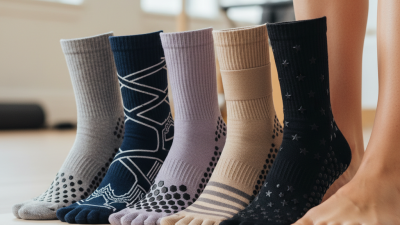
Cotton feels soft and breathable, but it can hold sweat during long studio sessions. Polyester dries faster and keeps its shape, while nylon can improve abrasion resistance.
Textile Exchange’s Materials Market Report 2024 states that polyester represented 57% of global fiber production in 2023.
Recycled polyester may reduce reliance on virgin materials, but it does not automatically feel softer or last longer. Request fabric percentages, test samples, and washing instructions before placing a large order. A practical mistake is judging quality by touch alone.
Grip designs need careful comparison.
Silicone dots may create flexible traction, while denser patterns can feel restrictive inside the shoe. Test socks on wood, mats, and reformer foot bars. Check whether the grip peels after repeated washing. The grip should support controlled movement, not replace proper equipment maintenance.
Size options also matter.
Ask suppliers for foot-length measurements, not only small, medium, and large labels. The European Committee for Standardization recommends standardized foot measurement practices in footwear sizing, but sock grading can still vary between factories. Compare ankle height, cuff pressure, toe-room, and shrinkage after five washes.
Less than five percent shrinkage sounds useful, yet the testing method matters. I would record measurements before and after washing, because assumptions often fail in bulk orders.
Check Supplier Quality, Customization, and Minimum Order Requirements
Buying pilates crew socks in bulk starts with a production sample, not a polished product photo. Check the cuff’s recovery, toe seams, fabric thickness, and grip pattern after repeated washing. Ask the supplier for test results and confirm whether they cover the same yarn, dye, and silicone print used in production. Small details matter. A sample can still mislead if it came from a different production run, so request a pre-shipment sample when possible.
Customization needs clear limits. Specify the sock height, fiber blend, colors, logo placement, grip layout, and size range in writing. Ask how color matching is checked and whether custom labels or packaging change the lead time. Textile Exchange’s 2024 Materials Market Report estimated global fiber production at 124 million tonnes in 2023. That scale makes written material specifications useful; a supplier’s general claim is not proof of a particular sock’s composition.
Clarify minimum order quantities by color, size, and design, not just by total pair count. A low MOQ may apply only to stock colors, while custom knitting or packaging may require a larger run. Get setup fees, sample charges, production timing, and reorder thresholds in the same quote. Then compare the cost per wearable pair, including expected defects. The cheapest quote may leave little room for fit problems. Decide how much inventory you can actually store before committing.
Confirm Samples, Delivery Timelines, and Bulk Order Terms
Buying Pilates crew socks in bulk requires more than comparing unit prices.
Request physical samples before approving a large order. Check the fabric stretch, cuff pressure, toe seams, grip, and recovery after washing. Test them during reformer and mat sessions.
A sock that feels comfortable for ten minutes may become tight after an hour.
Ask the supplier to confirm the sample specifications in writing. Record the fiber blend, size range, colors, logo placement, packaging, and acceptable defect level. Small differences matter. One sample may look perfect, while the production batch shows uneven stitching. I once focused too heavily on appearance and overlooked loose threads near the heel. That was a costly lesson.
Delivery timelines need clear stages, not one vague date. Confirm sample completion, production time, inspection, shipping, and the expected arrival window. Ask what happens if materials arrive late. Bulk order terms should state the minimum quantity, payment schedule, replacement policy, and approval process for color or sizing changes. Keep every revision in one document.
Verbal promises can become uncertain later. A realistic buffer is wise, although it can feel unnecessary when your launch date is close. Request a pre-shipment inspection, but remember that inspection reduces risk rather than removing it.