
65337edinw

Leave Your Message

您的浏览器版本不支持canvas

How to Choose Reformer Pilates Socks for Your Business?

Reformer Pilates Socks are a small purchase with a visible role in studio comfort, grip, and brand presentation. Demand for Pilates is also drawing business attention. ClassPass’s 2024 Look Back Report named Pilates the most-booked workout globally on its platform, with bookings up 84% year over year. That is a useful signal, not a forecast of sock sales. Booking data cannot tell a retailer which size, fabric, or grip pattern customers will choose.

For studio owners and buyers, the practical question is how to match product details to real use. Consider grip coverage on a reformer’s moving carriage, a secure fit during footwork, and fabric that feels comfortable through a full class. Check size consistency, wash-care guidance, and whether samples hold their shape after repeated laundering. Branding matters, too, but it should not come at the expense of comfort. Fit matters. Ask instructors and clients to test samples, and record specific feedback rather than relying on appearance alone. A neat pair on a shelf tells only part of the story. It is easy to overvalue a popular color or a low unit price. A more reliable choice weighs performance, repeat-order availability, and customer response together. The sections ahead offer a practical framework for comparing Reformer Pilates Socks before you stock them.
How to Choose Reformer Pilates Socks for Your Business?

Define Your Business Needs for Reformer Pilates Socks

How to Choose Reformer Pilates Socks for Your Business?

Define Your Business Needs for Reformer Pilates Socks

Start with the people who will wear them. Are they beginners needing extra grip, regular clients seeking a close fit, or studio staff using socks through several classes each day? The Global Wellness Institute’s Global Wellness Economy Monitor 2024 estimated the wellness economy at $6.3 trillion in 2023, with a projection of $9 trillion by 2028. This broad figure signals a growing wellness sector; it does not prove demand for Pilates socks. Your own class numbers and customer feedback matter more. Small details matter. Consider studio temperature, flooring, preferred coverage, and how often clients wash their socks. A thick sole may feel cushioned, yet fit poorly inside a close-fitting reformer strap.

Tips: Ask a few clients to test sample pairs during real classes. Check whether grip patterns stay in place, seams rub, and fabric retains its shape after washing. Record feedback, including complaints. They count.

Then set practical purchasing requirements. Define a target price, size range, reorder quantity, and acceptable delivery time before comparing suppliers. Request material and care details, and inspect samples rather than relying on product photos. If you plan to offer socks at reception, test packaging and sizing labels too. I’ve seen buying decisions lean too heavily on appearance; that’s an easy mistake to make. Review sell-through and returns after a small first order, then adjust the specifications.
Identify Essential Grip, Fit, and Fabric Features

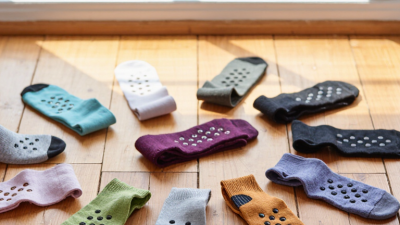
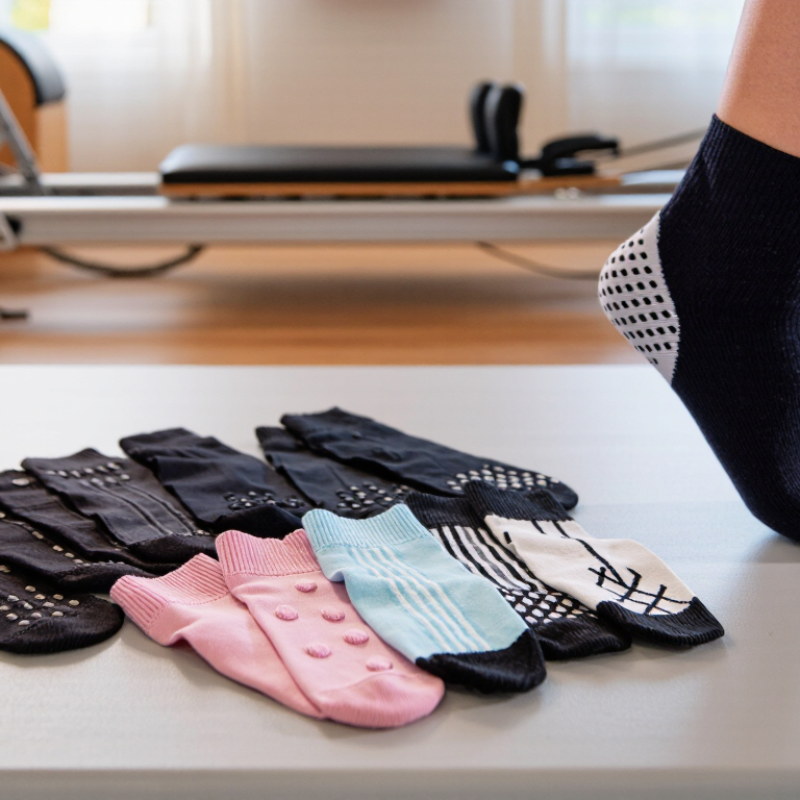
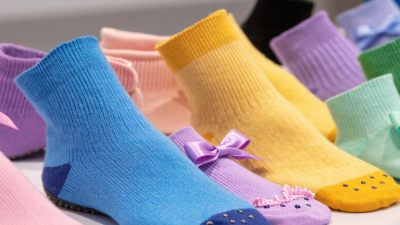
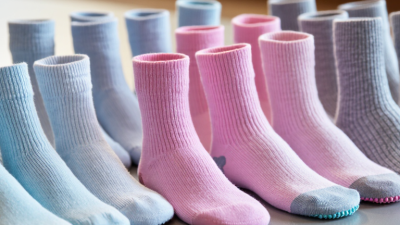
Grip is the feature customers notice on the reformer. Look for silicone patterns that cover the ball of the foot and heel, not just the center. A sample should feel secure during controlled footwork without sticking uncomfortably during transitions. Test several pairs on your studio’s actual equipment. Then wash them repeatedly, since grip can change with wear. Grip helps, but it cannot replace careful movement.

Fit matters just as much. Socks should stay in place without squeezing toes or leaving loose fabric beneath the arch. Check whether the heel pocket slips when someone points and flexes their foot. Small details matter. Offer a useful size range, and inspect toe seams for rubbing. One awkward trade-off: a very snug fit may feel supportive to some clients and restrictive to others.

Fabric affects comfort, care, and repeat purchases. Cotton blends can feel soft, while breathable synthetic fibers may dry faster between classes. Consider reinforced heels and toes, where friction often wears fabric thin. Ask suppliers for care instructions, then test a few samples through your usual laundry routine. A small trial order can reveal problems that a product sheet misses. Don’t assume the most attractive grip pattern will suit every foot or reformer surface.

Compare Suppliers, Customization Options, and Order Terms

When comparing suppliers, request samples from more than one source and test them in an actual reformer class. Check whether the silicone grip stays secure on a smooth carriage, and whether seams rub after repeated movement. Small details matter. Ask about fabric composition, size ranges, and how sizing is measured. A chart based only on foot length may not show whether the sock fits a wider heel.

Customization can include colors, grip patterns, packaging, and woven labels. Confirm which options affect the minimum order quantity and unit price. Ask for a pre-production sample with your artwork; a digital mock-up cannot reveal every color or placement issue. I still find this part easy to underestimate. A custom design can look polished but feel too warm during a busy class.

Get order terms in writing. Compare minimum quantities, sample charges, production time, payment schedule, shipping costs, and policies for defects or shortages. Ask whether repeat orders can match the original fabric, grip, and color. A low unit price may hide expensive setup fees or long lead times. If the supplier gives vague answers, pause and clarify before paying a deposit. Small trial orders are useful, though they may cost more per pair. That trade-off is not always obvious.

How to Choose Reformer Pilates Socks for Your Business

Compare suppliers by the factors that matter most when evaluating customization options and order terms.

This illustrative 100-point evaluation model prioritizes minimum order quantity flexibility and customization range, followed by landed cost, lead time, and reorder consistency. Use it as a comparison framework, then verify each supplier’s specifications, quotes, and terms directly.

Assess Pricing, Safety Standards, and Inventory Needs

When choosing reformer Pilates socks for your business, compare the full cost, not just the unit price. Include shipping, packaging, taxes, and likely replacement costs in your calculation. A low quote can become expensive if sizing runs inconsistent or seams fail after repeated washing. Ask suppliers for sample pairs, then check stitching, stretch, and grip on a studio floor. Small details matter.

Safety deserves the same attention as price. Request clear material information and relevant test documentation, such as grip or colorfastness results. Check that silicone patterns stay attached after laundering and do not feel slick on your studio’s actual surfaces. Standards and requirements can vary by market, so verify what applies to your location. A supplier’s assurance alone is not enough; keep records and inspect incoming stock.

Tips: Start with a modest order across the sizes your clients actually wear. Track sales, returns, and requests for unavailable sizes for several weeks before reordering. Keep a small buffer for busy periods, but avoid filling shelves with untested colors. Inventory estimates are never perfect. I’d review them monthly; seasonality can make last month’s numbers misleading.

How to Choose Reformer Pilates Socks for Your Business? — Assess Pricing, Safety Standards, and Inventory Needs

Business Area Assessment Dimension Data or Evaluation Method Recommended Action
Pricing Compare supplier quotes Request unit price by order quantity, sample cost, setup charges, packaging cost, shipping, duties, and payment terms. Compare quotes on the same product specification and delivery terms. Calculate the landed cost per sellable pair rather than comparing unit prices alone.
Pricing Landed cost per pair Landed cost per pair = product cost + allocated freight + duties/taxes + packaging + inspection or other per-unit charges. Use the same cost formula for every supplier and include expected defective or unsellable units in the calculation.
Pricing Retail price and gross margin Gross margin (%) = (selling price − landed cost) ÷ selling price × 100. This is a planning formula; it does not include operating expenses, payment fees, or marketing. Set prices using your own target margin and sales channel costs. Recheck the calculation for studio retail, online sales, and member bundles.
Pricing Sample and quality costs Evaluate samples for fit, grip coverage, stitching, fabric feel, wash performance, and size consistency before placing a bulk order. Record sample and testing costs separately, then include recurring quality-control costs in the product budget.
Safety & Quality Grip performance There is no single universal Pilates-specific certification for grip socks. Assess grip pattern coverage, adhesion, and performance on the types of clean, dry studio surfaces where the socks will be used. Test representative samples on relevant equipment surfaces. Do not describe socks as slip-proof or risk-free based only on the presence of grip dots.
Safety & Quality Fit and construction Check that heel placement, toe seams, elastic, and size grading are consistent. Socks should fit securely without excessive compression or loose fabric that could affect use. Inspect samples across the offered size range and include fit and seam checks in incoming quality inspections.
Safety & Quality Care and durability Wash-test samples according to the proposed care instructions. Check shrinkage, grip attachment, color transfer, seam strength, and shape retention after washing. Confirm that care instructions match test results and are included on the product or packaging where required.
Safety & Compliance United States textile labeling Textile products covered by U.S. rules generally require fiber content, country of origin, and the identity of the manufacturer or another responsible business on labeling. See the FTC textile labeling guide. Confirm the product’s labeling obligations for the destination market with your compliance adviser or local regulator before sale.
Safety & Compliance European Union textile composition EU Regulation (EU) No 1007/2011 sets requirements for textile fibre names and fibre-composition labeling. See the official regulation. Check that fibre descriptions and composition information meet the rules in each market where the product will be sold.
Safety & Compliance Chemical restrictions Products placed on the EU market may be subject to REACH restrictions on certain chemicals. Requirements depend on product materials and substances. See the European Chemicals Agency restrictions information. Ask suppliers for relevant material declarations and test documentation; verify requirements for the specific product and sales market.
Inventory Size and color assortment Use sales history, customer demographics, and fitting feedback to determine the size and color mix. There is no single size curve that fits every studio or customer base. Start with a limited assortment, track sales and stockouts by size and color, and adjust future orders using actual demand.
Inventory Reorder point Reorder point (units) = average demand per day × supplier lead time in days + safety stock. For example, demand of 4 pairs per day, a 30-day lead time, and 30 pairs of safety stock gives a reorder point of 150 pairs. Use your own demand and lead-time data; review the reorder point when sales patterns or supplier delivery times change.
Inventory Lead time and minimum order quantity Confirm production time, shipping time, minimum order quantity, order-change deadlines, and the supplier’s process for handling delays or shortages. Include the full replenishment timeline in your stock plan and avoid ordering more than you can sell or store responsibly.
Inventory Stock monitoring Track units received, units sold, returns, defects, and ending stock by size and color. A basic stock record is: opening stock + receipts − sales − adjustments = closing stock. Review stock regularly and investigate differences between recorded inventory and physical counts before reordering.

Test Samples Before Choosing a Supplier and Placing an Order

When choosing reformer Pilates socks, request samples before approving a supplier or placing a bulk order. ClassPass’s 2024 Look Back report named Pilates its most-booked workout for the second year running on its platform. That signals strong interest, but it does not tell you which sock will suit your customers. Small details matter.

Test samples on a reformer, not only on a desk. Check whether grip dots stay secure under the forefoot and heel, and whether the sock shifts during repeated footwork. Try different foot sizes. Look for tight seams, stretched cuffs, and fabric that bunches inside the shoe. Wash samples several times, then compare fit and grip. AATCC TM135 provides a standard method for assessing fabric dimensional changes after laundering; ASTM D4966 measures textile abrasion resistance. These methods can support supplier discussions, though a lab result cannot replace a real class trial.

Keep notes from each test. Record the size, wash cycle, surface feel, and any slipping or pressure points. Ask the supplier for material details and test conditions, not just a general claim of durability. I would not treat one sample as proof of consistent production. Request samples from a later production batch if possible. It takes extra time. That can feel excessive, but an uncomfortable pair may cost more in returns and complaints than a careful test.