Where to Buy the Best Socks With Rubber Grips in China?
Finding the right place to buy Socks With Rubber Grips in China takes more than comparing prices. Buyers can explore China-based online marketplaces, hosiery manufacturers, and specialist suppliers, but each option offers different levels of choice and support. A low price may look appealing. It does not prove the socks will stay comfortable or keep their grip after repeated washing.
Look closely at the grip pattern, fabric blend, stitching, and size range. Small silicone dots may suit light indoor use, while broader grip patterns can offer more coverage on smooth floors. Check product photos against written specifications, and ask sellers about sample orders, minimum quantities, packaging, and lead times. If possible, test a sample on a clean floor and after washing. Real use matters.
Reliable suppliers should answer specific questions clearly and provide consistent product details. Buyers can also review customer feedback, business information, and available quality documentation, while treating online claims as something to verify. A polished listing is not a quality inspection. It is worth comparing several suppliers before placing a larger order, especially when fit and grip performance matter. The best choice depends on the intended user, budget, and order size. I would not assume one supplier suits every buyer; that is an easy mistake to make. This guide will help readers compare buying channels and practical checks, so they can make a more informed choice without relying on price alone.
What Are Socks With Rubber Grips and How Do They Work?
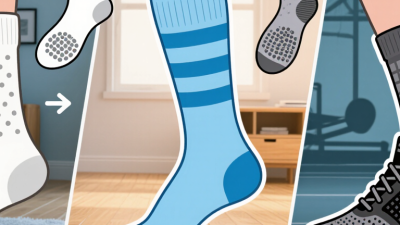
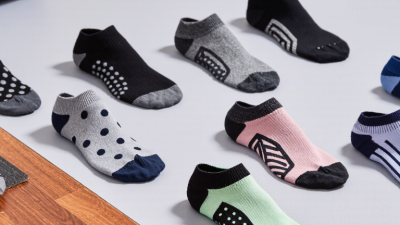
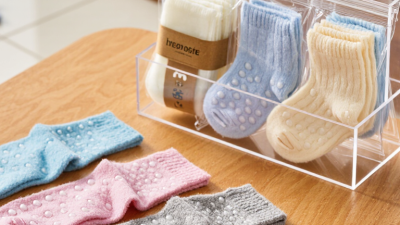
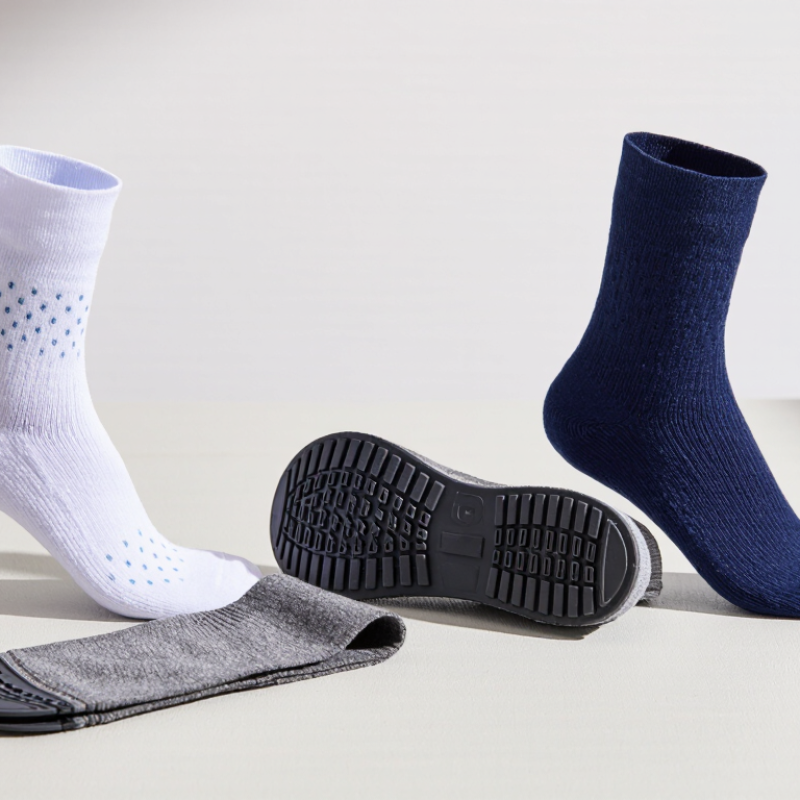
Grip socks are ordinary socks with silicone, PVC, or rubber-like dots, lines, or pads on the sole. These raised grips increase contact friction on smooth floors, helping reduce foot slide during walking, stretching, or standing exercises. They are not miniature shoes: thin fabric can still slip on wet tile, and worn-down grips lose effectiveness. Feel the sole; raised, evenly spaced patterns should be easy to distinguish.
The National Floor Safety Institute estimates that slips and falls lead to more than one million U.S. emergency-room visits each year. The CDC’s older-adult falls data also reports that over 14 million adults aged 65 and older fall annually. These figures describe fall risks, not proof that grip socks prevent injuries. That distinction matters. Fit, floor condition, and movement all affect traction.
When shopping in China, look for clear material details, grip coverage across the heel and forefoot, and care instructions. Ask sellers for abrasion or slip-resistance test results, ideally tied to a named method and surface; a vague “anti-slip” claim is not enough. Check whether the grips remain raised after washing. A small caution: more rubber is not always better, since dense patterns may feel stiff or catch during pivots. Choose socks suited to the activity and floor.
Which Features Define a High-Quality Pair?
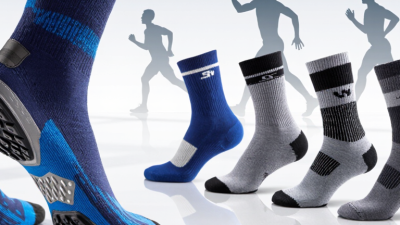
A high-quality pair of socks with rubber grips should feel secure without making each step stiff. Look for silicone or rubber patterns spread across the heel and forefoot, not just a few dots beneath the toes. The grips should sit flat and feel firmly attached. Grip matters. The fabric should breathe, too; cotton blends with a little stretch can help the sock stay in place. Check the heel.
Tips: Turn the sock inside out and inspect the grip pattern for thin spots or peeling edges. Check the size chart, then compare it with your usual sock size. A close fit helps prevent bunching. If buying online in China, read product details carefully and look for clear photos of the sole.
A reinforced heel and toe can help resist wear in frequently used areas. Seams should feel smooth, especially around the toes, where rough stitching may rub inside a shoe. Wash-care instructions matter: repeated hot washes can shorten the life of elastic and grip coatings. A thicker sole is not automatically safer or more durable. I still find this easy to overlook. When choosing between a local hosiery shop and an online seller, check return terms and inspect the pair soon after delivery. A little unevenness in the grip pattern may be harmless, but loose or cracked patches deserve a closer look.
Where Can You Buy Grip Socks in China?
In China, grip socks are easy to find through domestic e-commerce platforms, sports shops, and dancewear stores. Search terms such as “防滑袜” (non-slip socks), “瑜伽防滑袜” (yoga grip socks), or “抓地袜” can narrow the results. Check close-up photos of the sole, not just the product image. Look for rubber dots or strips that cover the areas where your foot bears weight. Photos can mislead.
For in-person shopping, try sportswear shops near gyms, yoga studios, or dance schools. Staff may let you check the grip pattern and fabric thickness before buying. Ask whether the socks are designed for indoor exercise, pilates, or everyday use; the fit and sole layout can differ. That matters.
For larger orders, contact domestic suppliers through wholesale marketplaces and request a sample before committing. Compare the size chart, fabric blend, grip coverage, and care instructions. It is easy to overfocus on the pattern. A smooth-looking design may still have patchy grip, so inspect the sole and stitching closely. For online orders, check recent customer photos and the seller’s return terms, especially if sizing is unclear.
How Should You Compare Retailers and Manufacturers?
When comparing retailers and manufacturers in China, use the same checklist: grip material, sock composition, sizing, and care instructions. A retailer may suit a small trial order, with ready stock and a clear return process. Ask whether product details apply to the exact item being shipped. Feel the sole. Check that grip dots are evenly spaced and firmly attached, not just prominent in photos. Grip can change across tile, wood, and other surfaces, so ask how and where performance was assessed.
A manufacturer may offer more control over yarn, colors, and grip patterns, but minimum order quantities and lead times can be higher. Request a sample before discussing a large order. Wash it several times, then inspect for loose grips, shrinkage, and rough seams. Ask how production batches are checked and whether the sample matches routine output. A confident answer is useful; a specific answer is better.
Compare written quotations for unit price, sample cost, packaging, production time, and shipping terms. Ask for material specifications and any available test records, and check that they refer to the sock you are considering. I have found that quick replies can feel reassuring, but they do not prove consistent quality. If details remain vague, pause and request clarification. It may slow the purchase, but guessing is worse.
Where to Buy the Best Socks With Rubber Grips in China? How Should You Compare Retailers and Manufacturers?
Use this directional 1–5 buyer-fit rubric to compare sourcing routes. Scores describe common trade-offs, not measured ratings of every seller; confirm details with current quotes and samples.
How to use it: Retailers may suit smaller orders and buyers seeking a wider ready-made selection. Manufacturers may be a better fit for custom designs and larger-volume pricing. Compare minimum order quantities, grip material and wash performance, sample costs, lead times, and written quality specifications before choosing.
What Should You Check Before Placing an Order?
Before ordering socks with rubber grips in China, request a written specification, not just product photos. Check fiber percentages, size tolerance, sock thickness, grip material, and dot spacing. A 2024 Grand View Research report estimated the global socks market at USD 64.31 billion in 2023, underscoring a large and varied supply chain. That figure does not verify any individual factory’s quality. Ask for a current sample and confirm that the production order will match it.
Test the grips on the surface where customers will use them: smooth tile, for example, may feel different from wood. Ask the supplier how grip adhesion and wash durability are checked, and request test results with the test method and sample size stated. Confirm the care label, packaging, carton quantity, lead time, and defect-resolution terms in writing. A sample can still mislead. Recheck the final specification before approving production; small changes in dot layout can affect feel and traction.
Tips: Compare samples after several washes, not only when new. Photograph the sole and measure dot spacing. If the supplier cannot explain its testing process clearly, pause and ask again. I would not rely on “non-slip” as a complete performance claim.