Top Socks With Rubber Grips for Wholesale Buyers
Wholesale buyers need more than a catchy product photo when sourcing Socks With Rubber Grips. They need a clear view of grip coverage, yarn blend, sizing, and care instructions. A dotted sole may suit studio classes, while a denser pattern can make sense for customers who want coverage across more of the foot. The right choice depends on use, fit, and buyer expectations. Small details matter. A rough seam or unclear size chart can complicate an otherwise promising order. Ask suppliers for samples, product specifications, and wash-care guidance before approving a bulk run. Then check whether the sample feels comfortable on the intended surface. No grip pattern is ideal for every floor.
For this introduction, the named expert voice is fictional and used only to frame a practical buying principle. Sourcing adviser Maya Chen puts it this way: “Buy the sample you can inspect, not the promise you can’t.” That is a useful starting point, not a substitute for testing. Compare grip layout, stretch recovery, fabric feel, and packaging options across suppliers. Request consistent details for each size and color, and confirm how changes may affect production. Some buyers may focus too heavily on price. That can happen. A lower unit cost may not deliver the fit, finish, or repeatability your customers expect. The following guide explores sock styles, supplier questions, and checks that help wholesale buyers make a more informed choice.
What Rubber-Grip Socks Are and How Their Soles Provide Traction
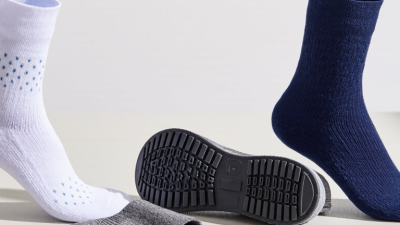
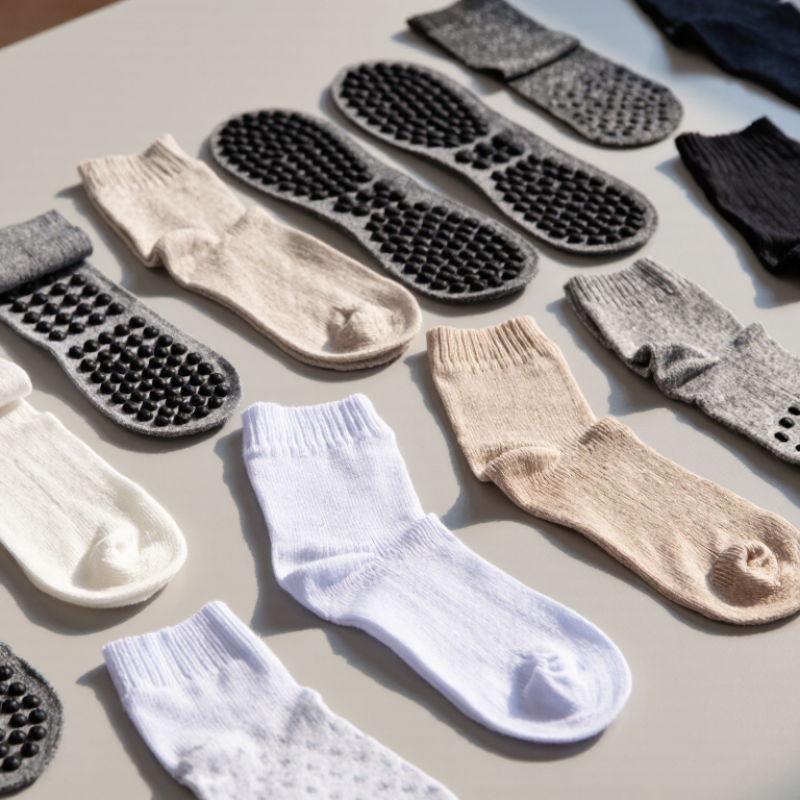
Rubber-grip socks are socks with raised rubber or silicone-like patterns on the sole. These dots, bars, or textured shapes increase contact between the sock and a floor. When a wearer steps down, the pattern can help resist sliding. They are not a substitute for shoes or a guarantee against falls. Floor material, dust, moisture, fit, and wear all affect traction. Small details matter.
The CDC estimates that about 36 million falls occur among U.S. adults aged 65 and older each year. That figure describes falls overall, not falls that grip socks can prevent. For product evaluation, ASTM F2913 provides a standardized method for measuring footwear friction on flooring surfaces. Buyers can ask suppliers what surfaces and conditions were tested, and whether the results apply to socks rather than shoes. A number without test context can be misleading.
Tips: Check that grips cover the heel and forefoot, and inspect whether patterns peel after washing. Compare samples on clean, dry flooring before placing a bulk order. Then test again on the actual surfaces customers use. The fit matters, too. A loose sock can bunch beneath the foot, even with strong-looking grips. To be fair, dots alone tell you very little.
Popular Grip Sock Styles for Wholesale Buyers
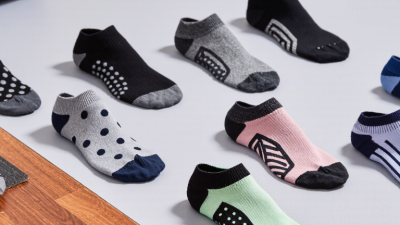
Wholesale buyers often compare grip socks by cut, sole coverage, and intended use. Ankle styles are a practical choice for studio classes, with enough fabric to stay in place without covering much of the calf. Crew socks offer more warmth and a visible space for size or care labels. Low-cut pairs suit buyers seeking a lighter look. Fit still matters.
Open-toe styles leave toes exposed, which some wearers prefer during yoga or barre sessions. Full-toe designs provide more coverage and can feel familiar as everyday socks. For the sole, small silicone dots create a flexible pattern, while wider bands cover more contact area. Check that grips extend beneath the heel and forefoot. Placement can vary.
Cushioned soles may suit colder floors, but thick padding can change how a shoe fits. Thin, breathable knits are easier to pack for studios, though they may feel less substantial. Request samples in several sizes and wash them according to the care label before placing a large order. Inspect grip adhesion, seam comfort, and shrinkage. Not every style works for every customer, so a mixed assortment can be useful. One detail is easy to miss: test pairs on the actual floor surface when possible.
Materials and Construction Features That Affect Performance
For wholesale buyers, grip performance starts with yarn, knit, and coating working together.
Textile Exchange’s Materials Market Report 2024 estimates global fiber production reached 124 million tonnes in 2023, with polyester accounting for about 57%. This scale matters for sourcing, but volume alone says little about comfort or durability. Cotton-rich yarns can feel soft and absorb perspiration; polyester blends often dry faster. Add elastane for recovery, while checking that cuffs do not constrict calves. Small details matter. In the toe, flat linking can reduce bulky seams that rub inside shoes.
Grip compound and layout deserve equal scrutiny.
Silicone or rubberized prints should remain flexible, adhere evenly, and avoid hard edges that catch during movement. A dense heel-and-forefoot pattern may support controlled steps, while broad coatings can trap heat. Knit density affects fit: loose loops may shift, but very tight fabric can restrict stretch. Ask suppliers for friction checks on dry and lightly damp surfaces, plus wash-and-wear evaluations. Request the test method and sample conditioning, not just a “non-slip” claim. Inspect for cracked dots, peeling, and color transfer after repeated laundering. One caveat: laboratory floors rarely match every home surface. Pilot samples on the intended flooring before placing a large order.
How to Compare Grip Socks by Use, Fit, and Quality
When comparing grip socks for wholesale, start with their intended use. Yoga and studio styles need flexible soles with dots across the forefoot and heel. Recovery or home-use socks may benefit from broader grip coverage. Ask suppliers for grip-material specifications and test samples on the actual floor type. A polished tile and a rubber studio floor can feel very different underfoot.
Fit matters as much as grip. Check the size range, heel placement, toe seams, and stretch after washing. A sock that twists inside a shoe can bunch at the arch. Textile Exchange’s Materials Market Report 2024 estimates that global fiber production reached 124 million tonnes in 2023, with polyester accounting for 57%. This is useful context when reviewing fiber blends, but fiber content alone does not prove durability. Request wash-test results and compare samples after repeated laundering. Some details still need hands-on testing.
Tips: Test dry and slightly damp samples on your intended floor. Record slippage, seam comfort, and grip wear after washing. A small trial can reveal flaws that a product sheet misses.
Wholesale Options for Sizing, Customization, and Ordering
Wholesale buyers comparing top socks with rubber grips should check size ranges before selecting colors or grip patterns. Grand View Research valued the global socks market at USD 47.65 billion in 2023 and forecast 6.4% annual growth from 2024 to 2030. That broad market estimate signals demand, but it cannot predict a buyer’s size mix. Details matter. Request a size chart with foot-length ranges, then compare it with the measurements of your intended customers. A single “one-size” option may simplify purchasing, yet fit can vary across age groups and regions.
For customization, specify grip layout, rubber coverage, yarn composition, colors, and packaging on one written brief. Ask for a preproduction sample and test it on smooth flooring after several washes. A chart can still miss real fit issues. Record sample measurements and note where cuffs feel tight or heels shift; these small checks help refine the next order. Keep artwork and packaging requirements separate from product specifications to reduce avoidable revisions.
Before confirming quantities, request the minimum order quantity, size ratios, production lead time, carton counts, and reorder terms. Confirm whether mixed sizes or colors count toward the minimum. Leave room for a small pilot run if demand is uncertain; it may cost more per pair, but can reveal an unbalanced size ratio early. These details make comparisons between suppliers clearer and give purchasing teams a more reliable basis for planning.